Like us!
 Follow us!
 Follow us !
 Follow us!
 Contact us!
 Subscribe!
 Follow Us!
 Follow Us!


- Standard Immigration 7 February 2026
Canada’s Open Work Permit 2026: Who Is Eligible & How to Apply
Canada continues to be one of the most attractive destinations for foreign workers, international students, and families. One of the most flexible options to legally work in Canada is the Open Work Permit. In 2026, Canada’s Open Work Permit program remains an important pathway for eligible applicants who want the freedom to work without being tied to a single employer.
This blog explains what an Open Work Permit is, who can apply in 2026, how it is different from an LMIA-based work permit, and what applicants should keep in mind before applying.
What is a Canada Open Work Permit?
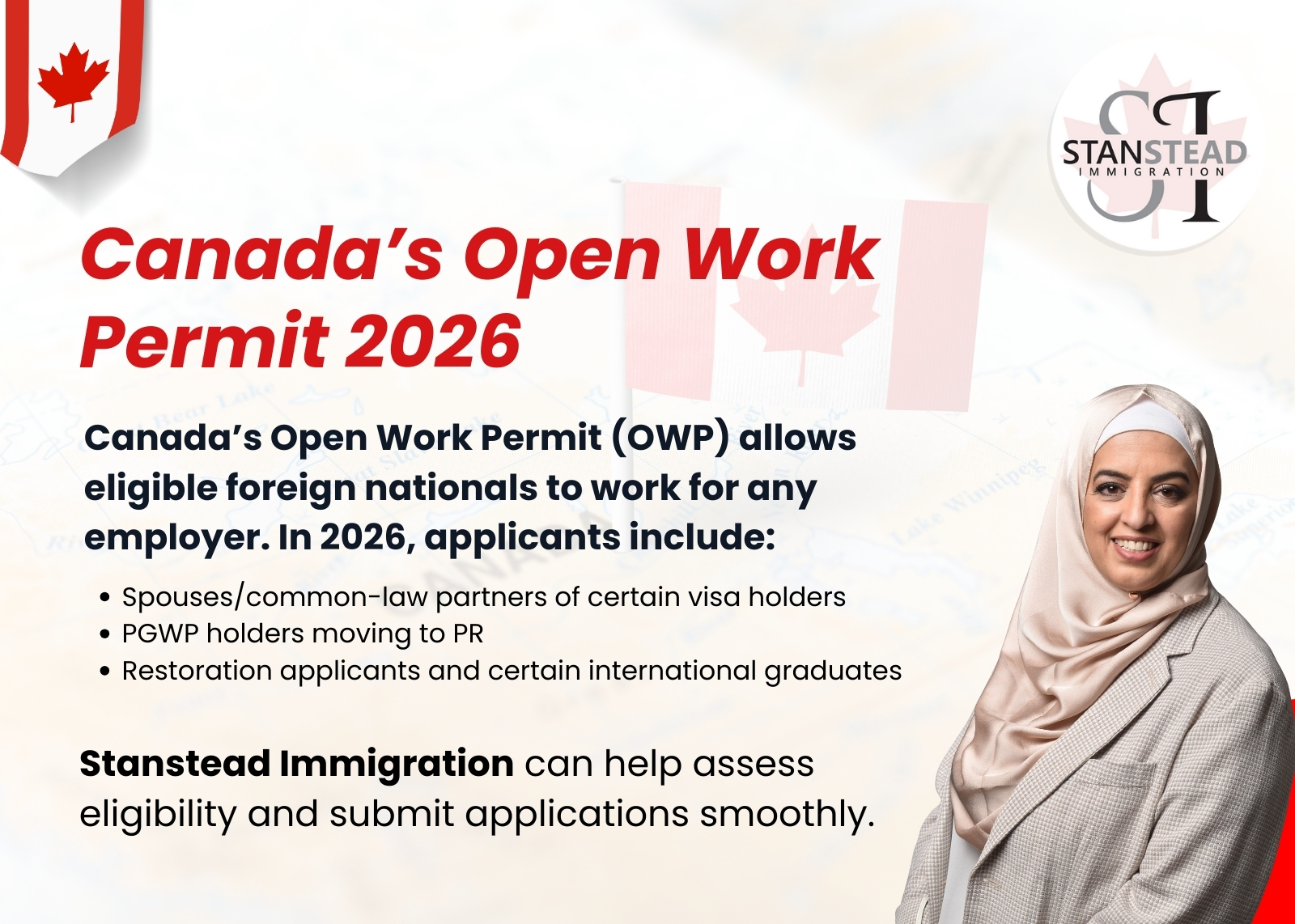
A Canada Open Work Permit allows foreign nationals to work for almost any employer in Canada without requiring a job offer or Labour Market Impact Assessment (LMIA). Unlike employer-specific work permits, open work permits give applicants flexibility to change jobs, employers, or locations within Canada.
However, open work permits are not available to everyone. They are issued only under specific immigration categories defined by Immigration, Refugees and Citizenship Canada (IRCC).
Who Can Apply for a Canada Open Work Permit in 2026?
In 2026, the following categories of applicants are generally eligible for a Canada Open Work Permit, subject to IRCC rules and program updates.
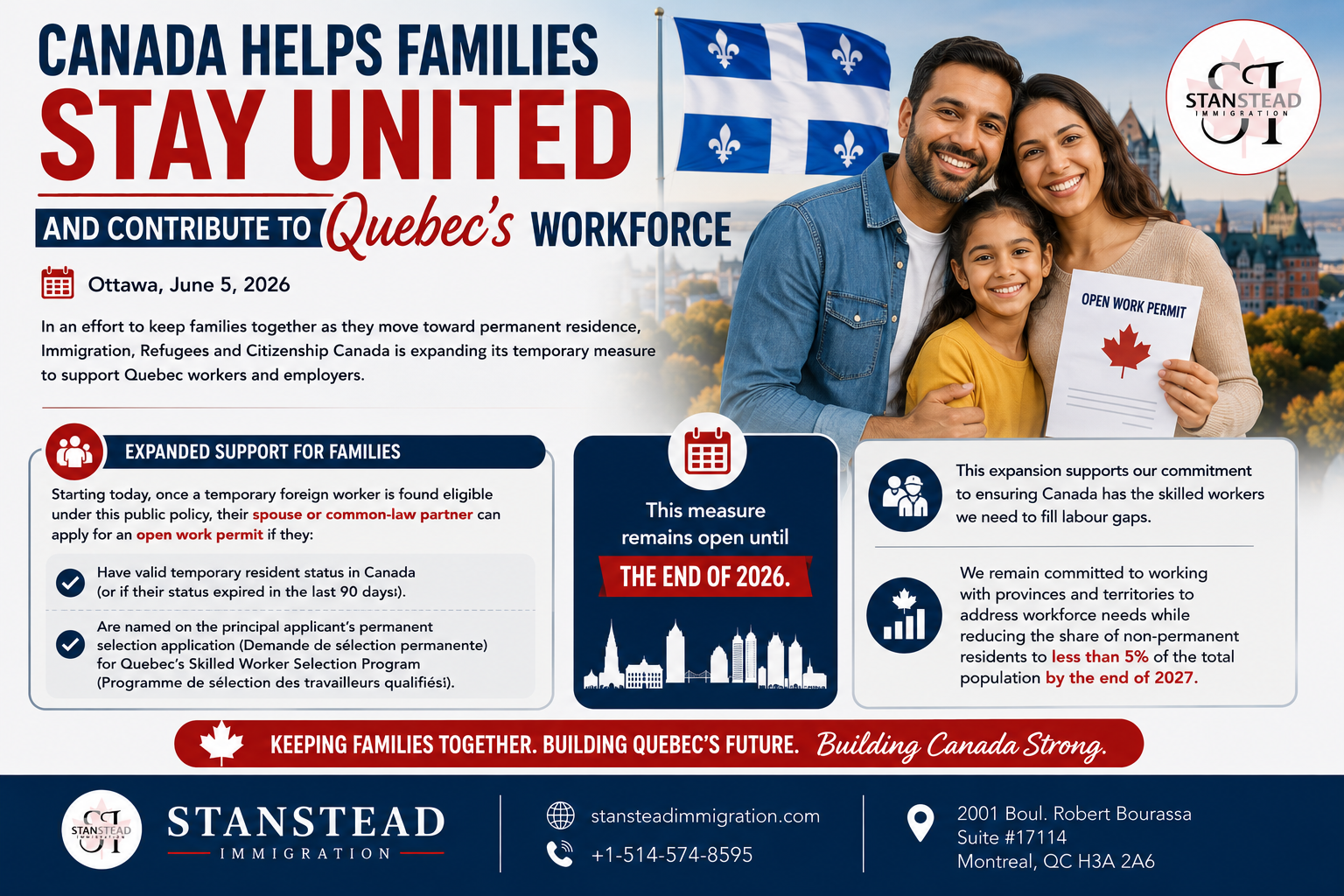
Spouses or common-law partners of skilled workers
Spouses or common-law partners of foreign workers employed in eligible TEER occupations may qualify for an open work permit. The principal applicant must hold a valid work permit and meet skill-level requirements set by IRCC.
Spouses or common-law partners of international students
Spouses of eligible international students studying full-time at designated learning institutions may apply for an open work permit, provided the student meets program and study requirements.
Post-Graduation Work Permit holders
International graduates who have completed an eligible program at a Canadian institution may apply for a Post-Graduation Work Permit. This open work permit allows them to gain Canadian work experience, often leading toward permanent residence pathways.
Permanent residence applicants
Some applicants who have already applied for permanent residence within Canada may qualify for a Bridging Open Work Permit. This allows them to continue working while their PR application is under processing.
Restoration of status applicants
Foreign nationals who have lost their work status but apply for restoration within the allowed time may be eligible for an open work permit under certain conditions.
Special public policy applicants
From time to time, IRCC introduces temporary public policies that allow specific groups to apply for open work permits. These policies depend on Canada’s labour market and immigration priorities in 2026.
Is LMIA Required for an Open Work Permit?
No. One of the biggest advantages of an Open Work Permit is that it does not require an LMIA. This means Canadian employers do not need to prove that no Canadian worker is available for the job.
However, it is important to understand that open work permits are still strictly regulated. Eligibility depends on immigration category, legal status, and compliance with IRCC requirements.
Is It Easy to Get an Open Work Permit?
An Open Work Permit is not automatic and not easy for everyone. Applications are carefully reviewed by immigration officers. Any missing documents, incorrect information, or misunderstanding of eligibility rules can lead to refusal.
Applicants must clearly prove their eligibility category, legal status, relationship documents where applicable, and intent to comply with Canadian immigration laws.
Validity and Duration of Open Work Permits
The validity of an Open Work Permit in 2026 depends on the applicant’s category. It may be issued for a few months or several years. For example, Post-Graduation Work Permits are usually issued based on the length of the study program, while spousal open work permits are often linked to the validity of the principal applicant’s status.
How Stanstead Immigration Can Help
Applying for an Open Work Permit requires a clear understanding of current IRCC rules and supporting documentation. Even a small mistake can delay or refuse an application.
Stanstead Immigration assists applicants by assessing eligibility, preparing accurate applications, and ensuring compliance with the latest Canadian immigration policies. With professional guidance, applicants can avoid common errors and improve their chances of approval.
Final Thoughts
Canada’s Open Work Permit in 2026 continues to offer flexibility and opportunity for eligible foreign nationals. Whether you are a spouse, graduate, or permanent residence applicant, understanding your eligibility is essential before applying.
Since immigration policies can change, it is always recommended to rely on official sources and professional advice before submitting an application.